Choosing Your Navigation Tools: Maps vs. Apps
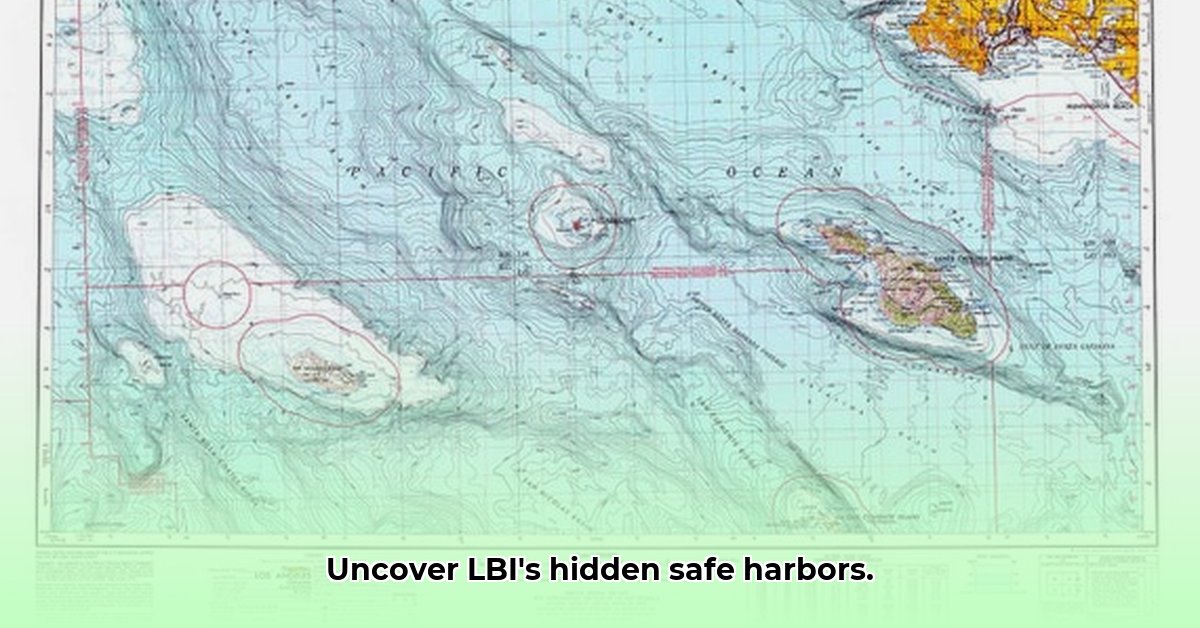
Planning a boating trip to Long Beach Island requires the right navigational tools. Two primary resources exist: basic maps and nautical chart apps. Basic maps offer a general overview, ideal for initial orientation and understanding the broader harbor layout. They show major channels and landmarks but lack the detailed information needed for precise navigation. Think of them as a road atlas for the water. For a helpful visual, check out this Long Beach Island map.
Nautical chart apps, on the other hand, provide detailed, real-time navigational information. They display water depths (bathymetry), buoy locations, and other navigational aids. Many integrate GPS and AIS (Automatic Identification System), showing the position and movement of other vessels. This is crucial for collision avoidance and situational awareness. They are the high-tech equivalent of a seasoned navigator.
Choosing between these tools depends on your experience and needs. Beginners might find a basic map sufficient for initial familiarization. More experienced boaters will benefit greatly from the precision and real-time data offered by a nautical chart app. Ideally, both resources should complement each other. A basic map provides a broader context, while the app offers the detailed, real-time information needed for safe navigation.
Mastering Your Nautical Chart App: A Step-by-Step Guide
Let's assume you've opted for a nautical chart app for your LBI journey. Here's a step-by-step guide to using it effectively:
Download and Setup: Download and install the chosen app on your device. Ensure your device is fully charged before departure and consider bringing a portable charger.
Understand Chart Symbols: Familiarize yourself with the app's symbols and abbreviations. Understanding these is crucial for interpreting the information displayed on the chart and ensuring safe navigation.
Plan Your Route: Before setting sail, carefully plan your route using the app's plotting tools. This should consider factors like water depth, current, and tides. Most apps allow you to plot a course and account for known hazards.
Utilize GPS and AIS: Ensure your device's GPS is enabled and functioning correctly. If your app includes AIS, utilize it to monitor the position and movement of other vessels. This is a critical safety feature that aids in collision avoidance.
Continuous Monitoring: Continuously monitor your position, speed, and surroundings. Regularly check for changes in weather conditions and adjust your course accordingly. Do not rely solely on autopilot.
Emergency Procedures: Familiarize yourself with the app's emergency features before you need them. Develop a backup plan including paper charts, compass, and VHF radio in case of electronic failure. Do you know how to use them?
Supplementing with a Basic Map: Orientation and Broader Context
While the nautical chart app is your primary navigation tool, a basic map offers valuable supplemental information. Use it to gain an initial understanding of the LBI waterways and identify potential hazards or restricted areas before planning your route on the chart app. It provides a crucial overview which helps ensure you are looking for the right features in the detailed app.
Prioritizing Safety: Essential Boating Practices
Even with advanced technology, safe boating depends heavily on responsible practices:
- Weather Check: Always check marine weather forecasts before and during your trip. Conditions change rapidly.
- Maintain Lookout: Keep a visual lookout at all times. Don't solely rely on electronics; your eyes and ears are vital safety tools.
- Safety Equipment: Carry essential safety equipment: life jackets, flares, first aid kit, etc., complying with all regulations.
- Navigation Rules: Familiarize yourself with all applicable navigation rules and regulations for the Long Beach Island area. Are your skills up to date?
Integrating Real-Time Weather Data: Enhancing Navigational Safety
Real-time weather data dramatically enhances navigational safety in Long Beach Harbor. To integrate this information into your navigation app, you'll need to consider several key factors.
Sourcing Reliable Weather Data: APIs and Multiple Sources
Multiple data sources provide greater reliability. The National Weather Service (NWS) API offers valuable real-time information, but commercial providers also exist. Select a source based on accuracy, coverage, API limitations, and cost, ensuring consistency and reliability.
Choosing and Configuring Your Navigation App: API Compatibility
Select a navigation app compatible with your chosen weather data source. Look for apps with seamless API integration capabilities that display weather information clearly and reliably. User reviews and feedback can guide your choice. Does the app's integration display the data accurately and usefully?
Step-by-Step Integration: A Simplified Example
The exact integration process depends on the specific app and API. A simplified example includes:
Account and API Key: Create an account with the chosen weather service and obtain your API key for authentication.
API Documentation: Thoroughly review the API documentation. Understand data formats, request parameters, and limitations.
App Configuration: Configure your app to utilize the correct API endpoint and provide your API key.
Data Fetching: Write code to fetch the relevant weather data (wind speed, direction, visibility, etc.) and include robust error handling. This should be as automated as possible.
Data Display: Design a clear, concise visual representation of the weather data on your navigation chart. Avoid visual clutter.
Testing and Refinement: Rigorously test the integration to ensure accuracy and reliability. Regular updates are needed.
Mitigating API Limitations: Caching, Rate Limiting, and Data Aggregation
API usage limits require strategies like caching fetched data (while ensuring freshness), implementing rate-limiting mechanisms, and aggregating data from multiple sources for redundancy.
Safe Navigation: Combining Technology with Seamanship
While real-time weather integration is invaluable, it's crucial to combine it with traditional nautical chart use and sound seamanship. Constant vigilance and situational awareness remain paramount for safe navigation. Over-reliance on any single technology is a dangerous practice.